eCommerce · Fashion Store
Fashion Website Development Company in India
Raqbash is a fashion store website development company in India. Every variant carries its garment measurements, a struck-through price is one the item was actually sold at, and checkout takes UPI first. On fashion, the return you prevented is worth more than the conversion you won.
- Websites delivered
- 110+
- Years experience
- 10+
- Rated on Google Reviews
- 4.9
- Checkout built for how India pays
- UPI-first
Trusted partners
Clients we worked with
From global enterprises to fast-growing startups, brands across the world trust Raqbash to build and scale their digital products.







Overview
Fashion website design for apparel, footwear and accessories
Raqbash does fashion website design for labels, boutiques and multi-brand retailers across India, from a single ethnic-wear line to a store that also carries footwear and accessories. Our boutique web development covers the parts a shopper never notices until they fail: variant data, image delivery on a slow phone, and a checkout that takes UPI and cash on delivery. A fashion store sells a feeling first, then gets judged on whether the parcel matches it.
Apparel has the highest return rate in retail, and most of it traces back to sizing and expectation gaps. So we build around fit confidence and rich product presentation: accurate variants, size guidance, honest imagery and a checkout tuned for how India actually pays — UPI, cards and cash on delivery.
One team
Boutique web development and fashion design, one team
A clothing site is a design job and a data job at once. The look earns the click; the size data decides whether the order stays sold.
Design
- Apparel website design that lets photography lead, with product grids that show colour and drape even at thumbnail size.
- Clothing brand website design that carries your voice into collection pages, lookbooks and emails, not just the header.
- Size guide layouts that read well on a phone, with the measurement table one tap away from the size picker.
- Boutique website design for small ranges, where every piece gets room and the founder's story carries the brand.
- Drop and sale templates your team can switch on themselves, so a festive edit does not need a designer each time.
Development
- Shopify or headless storefronts with size, colour and fabric as separate options and stock held per combination.
- Image pipelines that serve the right size and format to each device, so full-bleed lookbooks stay quick.
- Exchange-first returns flows that offer a different size before they offer a refund.
- Courier, COD verification and RTO tracking connected through your shipping partner's API.
- Instagram shop and Google Merchant feeds generated from the same product data the store uses.
The person who designs your size picker works beside the person who models your variants, so the two never disagree about what a size means.
What we build
Fashion Store Website Development Services We Offer
Our online clothing store website development services cover almost every apparel brief. That runs from a single-category label with sixty SKUs to a multi-brand retailer running seasonal drops.
Storefront On The Right Platform
Shopify, Hydrogen or a headless Next.js storefront on a commerce backend — chosen for your catalogue size, your team and your roadmap rather than for whichever one we prefer building.Rich Variants & Inventory
A clean size, colour and fabric variant model with per-variant stock and imagery, so shoppers see out-of-stock options as unavailable rather than discovering it at checkout.Size Guides & Fit Confidence
Garment measurements per variant with the measuring method stated, model height and size worn, and fit notes — the details that stop a return before it becomes one.Fast, Image-First PLP & PDP
Optimised imagery, lazy galleries and edge delivery so listing and product pages stay quick on a mid-range phone, which is where most Indian fashion traffic actually is.Search, Filters & Lookbooks
Faceted filters by size, colour, price and occasion, fast search, wishlists and editorial lookbooks your team can re-merchandise for a drop without a developer.India-Ready Checkout & Returns
UPI, cards and wallets through hosted checkout plus cash on delivery, with return and exchange flows and the policy reachable before someone pays rather than after.
Fit, pricing & checkout
Fit Confidence, Prices That Are Real & A Checkout Built For How India Pays
Apparel is won and lost on three things a shopper decides in under a minute: whether it will fit, whether the discount is real, and whether they can pay the way they always pay. We build for all three.
Fit Confidence, Because Returns Cost More Than Conversion
Prices And Discounts That Survive Scrutiny
What Ships Is What Was Shown
A Checkout Built For How India Actually Pays
- Consumer Protection (E-Commerce) Rules 2020 — seller details, return, refund and cancellation policies and a named grievance officer
- Legal Metrology disclosures for packaged goods where applicable
- GST-compliant tax and invoicing
- PCI-DSS scope minimised via hosted checkout (no card data on your servers)
- Consent-based analytics and marketing in line with India's DPDP Act
Sitemap
What a fashion store needs
Most apparel stores need these pages. A boutique with forty pieces needs fewer; a multi-brand retailer needs all of them, and more filters.
- Home
- The current collection or drop, a clear way into new arrivals, and the categories that sell.
- New arrivals and collections
- Seasonal edits and drops your team can publish and reorder without a developer.
- Category listing
- Filters for size, colour, fabric, occasion and price, with sold-out sizes greyed out on the grid.
- Product page
- On-body and flat photos, measurements for each size, fabric and care, and a note on how it fits.
- Size guide
- Garment measurements by category, how to measure yourself at home, and fit notes by cut.
- Lookbook
- Styled outfits that link to every item, for shoppers who buy the look rather than one piece.
- Cart and checkout
- UPI, cards, wallets and COD, with the courier's delivery estimate shown before payment.
- Returns and exchanges
- A self-serve request that suggests another size first and explains how a refund works.
- About and stores
- The brand story, plus store or studio addresses for customers who want to try things on.
Why Raqbash
Why Choose Raqbash for Fashion Store Website Development in India
Pick an apparel ecommerce website design agency on three habits. Are returns treated as a design problem rather than a logistics one? Is a performance budget held on an image-led build? Does platform advice ever argue for the smaller project?
We Have Shipped Fashion Commerce
A fashion marketplace, a D2C shopping app and an omnichannel retail portal are published under our case studies. Variants, merchandising and checkout are shipped work rather than a discovery exercise.We Treat Returns As A Design Problem
Most agencies are hired to lift conversion. On apparel the bigger lever is usually the return you prevented, and it is won with measurements and honest photography rather than with a bigger buy button.Fast On The Phone People Actually Use
Fashion lives on imagery and imagery is what wrecks mobile performance. We hold a budget from the first shoot — modern formats, responsive sources, deliberate loading — rather than optimising after launch.Platform Advice You Can Trust
Sometimes Shopify is simply right and we will say so. We recommend headless when catalogue size, bespoke merchandising or deep integrations genuinely justify it, not because it makes a bigger project.Policy Furniture Built, Not Bolted On
Seller details, returns, cancellations and a named grievance route as real placements reachable before payment. It is the part every template skips and the part a dissatisfied customer looks for first.Support Through Every Drop
A senior in-house team that plans releases around your collections, with a named lead on video and WhatsApp, accountable through each season rather than only until launch.
Building for the next drop?
Tell us your catalogue, your variant complexity and where returns come back from. Our team will send a free, fixed-scope quote for D2C fashion web design: storefront, sizing model and India-ready checkout.
Brands
Fashion Brands We Build Stores For
An ethnicwear label and a footwear brand are solving different versions of the same problem — one has four variant axes, the other has sizing that changes with every last. These six each break the catalogue somewhere different.
Womenswear & Ethnicwear Brands
The deepest variant complexity in apparel — size, colour, fabric and occasion at once — and the segment where fit questions and colour accuracy decide whether a first order becomes a second.See our D2C shopping appMenswear & Casual Labels
Repeat-purchase behaviour built on consistent sizing across a catalogue, where a customer who learns their size in your fits stops comparison-shopping altogether.Footwear & Accessories
Sizing that varies by last and by region, so measurement in centimetres alongside the size label does more work here than anywhere else in fashion.See our omnichannel retail portalKidswear Brands
Age and height bands that parents shop by rather than sizes, fast outgrowing cycles that reward exchange over refund — and imagery of children published only on the parental consent you hold.Athleisure & Activewear
Performance claims that need substantiating, compression and stretch that make fit guidance harder, and a customer who reads fabric composition before they read the price.Multi-Brand Fashion Retailers
Many brands, many size systems and no shared measurement standard — the case where normalising sizing across suppliers is the whole build rather than a feature of it.See our fashion marketplace
How we work
Our Fashion eCommerce Development Process
Six phases take your store from first conversation to live and supported — starting, before any design, with the variant model, how a garment actually gets measured, and who owns the returns policy.
Step 01
Discover
We map your catalogue, your drop calendar, who your customer is and where orders come back from — because on apparel the returns pattern tells you more about the site than the traffic does.
Step 02
Catalogue, Sizing & Policy Pass
Before design, we settle the variant model, how garments get measured and by whom, how compare-at pricing will be recorded, and who owns the returns policy and the grievance route.
Step 03
Design
We design the product page, the listing grid and the checkout first, with a performance budget agreed before the first photograph arrives rather than negotiated after it.
Step 04
Develop
We build the storefront, variant and inventory model, measurement fields, filters and search, and the hosted checkout with UPI, cards, wallets and cash on delivery.
Step 05
Launch
Performance measured on real product photography rather than placeholders, checkout and COD paths rehearsed end to end, policy placements proofed, plus accessibility checks.
Step 06
Support
Ongoing support through your drop calendar — new collections and lookbooks, seasonal merchandising, and the catalogue hygiene an apparel store generates every month.
Tech & integrations
Technologies & Integrations for Fashion Stores
Clothing ecommerce website design runs on a modern, proven stack. Shopify or headless depending on what you actually need. A variant model that carries measurements, an image pipeline held to a budget, and UPI-first checkout with cash on delivery.
Storefront
- Shopify / Hydrogen
- Next.js
- React
- TypeScript
- Tailwind CSS
Catalogue & Sizing
- Size × colour × fabric variants
- Per-variant stock & imagery
- Garment measurement fields
- Dated compare-at pricing
Media & Performance
- Cloudinary / next-image
- AVIF & WebP responsive sources
- Swatches from product photography
- Core Web Vitals budget
Search & Merchandising
- Algolia search
- Faceted filters
- Lookbooks & collections
- Wishlists
Checkout & Fulfilment
- Hosted checkout (Razorpay / Cashfree)
- UPI, cards & wallets
- Cash on delivery with RTO controls
- Courier estimates & returns flow
Cost & timeline
Fashion store cost and timeline
Three common scopes, from a boutique's first site to a multi-brand store. We quote each one as a fixed scope once we have seen the range.
| Scope | What's included | Typical timeline | What drives cost | Price |
|---|---|---|---|---|
| Boutique site | Lookbook, collections, store details and ordering by WhatsApp or enquiry form, without an online cart. | 3–5 weeks | Number of collections, photography readiness | From ₹40,000 |
| Shopify fashion store | Custom theme, size and colour variants, size guides, UPI and COD checkout, exchanges and courier integration. | 6–10 weeks | SKU count, variant depth, apps and integrations | Fixed-scope quote |
| Headless or multi-brand store | A Next.js storefront, sizing normalised across brands, dedicated search, ERP or POS sync and several warehouses. | 12–18 weeks | Brands and size systems, integrations, store count | Fixed-scope quote |
Photography and garment measurements set the pace on fashion builds. We agree who measures each piece, and how, before the first import.
Every project gets a fixed-scope quote in writing before work starts.
Our work
Commerce We Have Built
A fashion marketplace, a D2C shopping app and an omnichannel retail portal — published, and covering the three problems an apparel store actually has: catalogue, conversion and everything that happens after the order.
- eCommerce Platform
 Online Fashion Brand
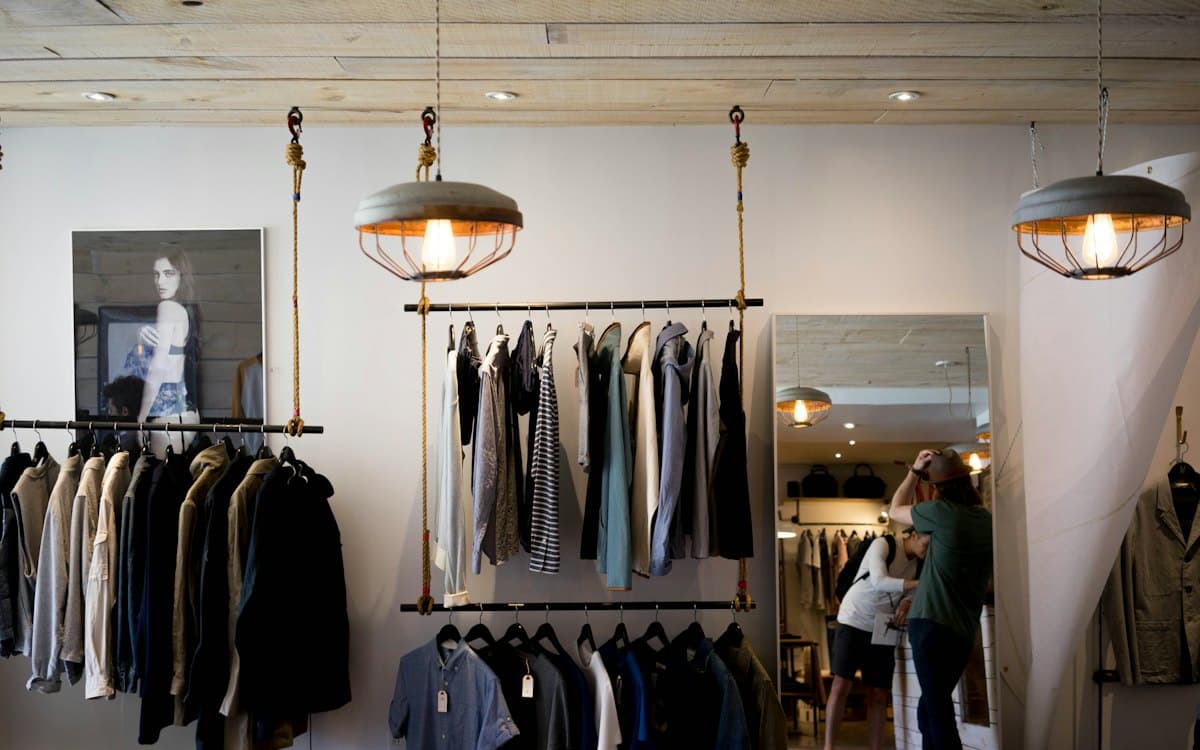
Fashion Marketplace
A fast, visual marketplace with rich discovery and seamless checkout.
Services
Website Development · SEO · Mobile App
- Next.js
- Node.js
- React Native
- AWS
View Case Study - Mobile App
 Direct-to-Consumer Brand
D2C Shopping App
A branded shopping app with personalization, push and one-tap checkout.
Services
Mobile App · SEO · Social Media Marketing
- Next.js
- Node.js
- Flutter
- Google Cloud
View Case Study - Web Platform
 Established Retail Brand
Omnichannel Retail Portal
One platform unifying online, in-store and marketplace sales and stock.
Services
Website Development · SEO · Admin Dashboard
- Next.js
- Node.js
- AWS
- PostgreSQL
View Case Study
FAQ
FAQs About Fashion Store Website Development in India
Common questions from Indian apparel brand owners — Shopify versus custom, reducing returns from wrong sizes, handling large variant counts, showing discounts and MRP honestly, what the site legally needs to display, UPI and cash on delivery, and timelines.
Should I build my fashion store on Shopify or a custom platform?
How do you reduce returns from wrong sizes?
How should we show discounts and MRP?
What does the site legally need to show — policies, seller details, a grievance officer?
Can you handle products with many size and colour variants?
Do you integrate UPI, cards and cash on delivery?
How long does it take to build a fashion eCommerce website?
Do you do both fashion website design and boutique web development?
Can you design a website for a new clothing brand with only a few products?
Start your fashion store with Raqbash
Book a free call with a fashion store website development company in India. We'll look at where your store loses people: the size question, the price they don't believe, or the checkout. Then we show what we'd build.
Explore more
Related Services & Industries
eCommerce Website Development
Fast, conversion-optimized storefronts for retailers, D2C brands and wholesalers.Jewellery Store Website Development
High-trust jewellery eCommerce with hallmarking, live gold pricing and secure high-value checkout.Furniture Store Website Development
Furniture eCommerce with room visualisation, variants, delivery logic and financing options.eCommerce Development
Online stores that load fast, rank high and convert browsers into buyers.Website Development
High-performance, SEO-ready websites that turn visitors into customers.