Edtech · University
University Website Development Company in India
Raqbash builds higher-education estates where hundreds of programmes stay findable in three clicks, a hundred departmental editors publish without fragmenting the site, and a replatform keeps the search authority you spent a decade earning.
- Websites delivered
- 110+
- Years experience
- 10+
- Rated on Google Reviews
- 4.9
- Accessibility standard we build to
- WCAG 2.2 AA
Trusted partners
Clients we worked with
From global enterprises to fast-growing startups, brands across the world trust Raqbash to build and scale their digital products.






Overview
University website design and development for Indian universities
Raqbash is a university website design and development company in India providing website design for state, private and deemed universities and multi-campus institutions. Our university website development covers the programme finder, admissions hand-offs, site search and a CMS that lets dozens of departments publish without breaking the whole. We are not a university or an accrediting body. We build the site; your institution owns every word and figure on it.
A university site is judged on whether an applicant can discover the right programme, understand eligibility and fees, and start an application without friction, on any device, meeting accessibility obligations. We build the information architecture and admissions journeys that make a sprawling institution feel navigable.
One team
One team for university website development and design
A university site has to serve an applicant, a PhD scholar, a parent, a recruiter and an alumnus without making any of them wade through the others' pages.
Design
- Audience research with your admissions, academic and alumni offices, so navigation follows how each group actually searches.
- A template set covering programme, department, faculty profile, event and research story, so departments build pages that match.
- Programme-finder filters for level, discipline, mode and campus, tested with your real course names rather than dummy text.
- A visual identity that holds across forty departments without each one inventing its own banner and colours.
- Accessible patterns for tables, timetables and PDFs, the content types that most often fail an audit.
Development
- A headless CMS with workflow: departments draft, a central web team approves, and nothing goes live unreviewed.
- Search across programmes, people and documents, using Algolia or Elasticsearch where the size of the site calls for it.
- Application hand-off to your admissions portal or SIS that carries the programme the applicant chose.
- Course and EducationalOrganization schema on every programme page, so results can show level, duration and campus.
- Performance budgets per template, so a heavy research page or event gallery never slows the admissions pages.
Because one team owns the templates and the code, a design rule such as heading order is enforced by the CMS rather than left to each editor.
What we build
University Website Development Services We Offer
Six capabilities cover almost every higher-education brief we take on, from a single-faculty institution to a multi-campus university with constituent colleges publishing from a hundred desks.
Programme Finder & Catalogue
A searchable, filterable programme catalogue so a prospect reaches the right course by level, faculty, mode and interest in a few clicks, even across hundreds of programmes.Admissions Journeys
Programme-specific eligibility, fees, deadlines and application entry points that hand off cleanly to your admissions system instead of dead-ending in a PDF.Scalable Content Architecture
A CMS structure and governance model that lets many departments publish consistently without the site fragmenting into fifty different sites.Audience-Based Navigation
Clear paths for prospective students, current students, faculty and alumni, so each audience reaches its content without wading through everyone else's.Accessible, Multilingual Build
WCAG 2.2 AA, fast, mobile-first pages with multilingual support where your student body needs it, and authoring checks so it stays that way.News, Events & Research
News, events and research showcases that build institutional reputation and feed the topical authority that drives long-term search visibility.
Findability, governance & migration
Findability At Scale, Governed Publishing & Migration That Keeps Your Rankings
We make hundreds of programmes findable in three clicks, give a hundred departmental editors a structure they cannot fragment, keep accessibility enforced where content is created, and migrate your estate without erasing the search authority you spent a decade earning.
A Programme Finder That Still Works At Three Hundred Courses
Governed Publishing Across Every Department
Accessibility Enforced At The Point Of Publishing
Migration That Keeps The Rankings You Already Have
- WCAG 2.2 AA accessibility across a large, multi-author site
- Consent-based handling of applicant and student data under India's DPDP Act
- Secure hand-off to admissions, LMS and student-information systems
- HTTPS/TLS everywhere with governed, role-based content publishing
- Aligned with FERPA-style safeguards for institutions serving international students
Sitemap
What a university website needs
Large universities need every page type below, repeated across faculties. A smaller single-campus university can launch with a subset and grow into the rest.
- Home
- Who the university is, its headline programmes, the current admission cycle and a route for each audience.
- Programme finder
- Search and filters across every course, each result linking to its programme page.
- Programme pages
- Eligibility, fees, duration, intake, syllabus outline and an apply button tied to that programme.
- Admissions
- Cycles, entrance tests, scholarships, documents and the application portal link.
- Faculties & departments
- Each department's people, labs and notices, edited by that department.
- Research
- Centres, projects, publications and calls for collaboration or funding partners.
- Student life & campus
- Hostels, clubs, sports, transport and student support services.
- Approvals & recognition
- Approvals and grades as dated entries your office reviews and keeps current.
- Alumni & careers
- The alumni network, placement cell contacts and jobs at the university itself.
Why Raqbash
Why Choose Raqbash for University Website Development in India
Universities choose Raqbash because we treat the brief as the information-architecture problem it actually is (findability, governance, accessibility and migration) rather than as a homepage that happens to be large.
We Build For Scale, Not For A Homepage
A university brief is an information-architecture problem wearing a design brief's clothes. We start with the estate (programmes, departments, audiences, URLs) and let the visual design follow the structure.Findability Engineered, Not Hoped For
Faceted search over hundreds of programmes, an indexable URL per course and schema that answer engines can read. Prospects who cannot find their programme in three clicks apply somewhere else.Governance Your Marketing Office Can Actually Hold
Roles, review steps and templates that constrain contributors helpfully. The point is not to slow departments down; it is to let them publish without anyone rebuilding the site every two years.Accessible By Default, And After Launch
Every education site we build ships to WCAG 2.2 AA, and on a multi-author estate we put the checks where the content is created so conformance survives contact with real editors.Replatform Without Losing Your Search Equity
URL inventory, redirect mapping and post-launch monitoring are part of the plan from week one, because a university has spent years earning rankings that a careless migration erases in days.Accountable Across Admissions Cycles
A senior in-house team with a named lead, shared roadmaps and scheduled reviews with your web committee, accountable through admissions cycles rather than only until go-live.
Ready for an estate that stays coherent as it grows?
Tell us your faculties, programme count, systems and who publishes today, and our team will send you a free, phased scope covering a programme finder, governance model and a migration plan for the URLs you already rank for.
Institutions
Institutions We Build Websites For
A single-faculty private university and a multi-campus institution with constituent colleges have almost nothing in common operationally. These six each break a website in a different place.
State & Private Universities
Broad, multi-faculty estates where the real problem is a prospect finding one programme among hundreds, and five audiences sharing one homepage without fighting over it.Deemed-To-Be Universities
Institutions whose status, structure and programme portfolio need explaining clearly to applicants and families who will not know the distinctions: presented as you state them, never as we assert them.Technical & Engineering Universities
Branch-level programme depth, lab and research facilities, and industry engagement, with admissions journeys that survive counselling seasons and multiple entry routes.Explore college website developmentMedical & Health Sciences Universities
Constituent colleges, clinical affiliations and postgraduate specialisations organised so an applicant can navigate a genuinely complicated programme structure without a prospectus.Multi-Campus & Constituent-College Universities
Shared identity with genuinely distinct campus and college sites, per-campus admissions and notices, and one governance model that does not force everything through head office.See our student assessment portalResearch-Intensive Institutions
Faculty profiles, centres, publications and grant-funded projects structured as browsable, citable content rather than a PDF archive nobody can search.
How we work
Our University Website Development Process
Six phases take a university estate from audit to live and supported, with a full content and URL audit before any design work, and a migration phase that treats your existing rankings as an asset to protect rather than a risk to discover on launch day.
Step 01
Discover
We map your faculties, programmes, audiences and systems, and find out who publishes what today, because that is who will publish tomorrow.
Step 02
Audit & Architect
We inventory the existing estate, often thousands of URLs, and decide what migrates, what merges and what quietly dies, then design the information architecture and governance model before any visual work starts.
Step 03
Design
We design templates rather than pages: programme, department, faculty profile, news and campus, each accessible and each usable by an editor who is not a designer.
Step 04
Develop
We build the programme finder, admissions journeys, CMS roles and workflows, plus the hand-offs to your admissions, student-information and LMS platforms where their APIs allow.
Step 05
Migrate & Launch
Content migration, a mapped redirect plan for every retired URL, accessibility and performance checks, editor training by department, and rank monitoring through the weeks after go-live.
Step 06
Support
Ongoing support from the build team across admissions cycles: new programmes, new departments, content help and the steady stream of changes a live university site generates.
Tech & integrations
Technologies & Integrations for University Websites
We build higher-education estates on a modern, proven stack: faceted search over the programme catalogue, a governed headless CMS many departments can publish from, a real migration workstream, and secure hand-offs to the systems you already run.
Frontend
- Next.js
- React
- TypeScript
- Tailwind CSS
- Responsive & mobile-first
Search & Discovery
- Algolia / Elasticsearch
- Faceted programme filters
- Indexable programme URLs
- Structured data
CMS & Governance
- Headless CMS (Sanity / Strapi / WordPress)
- Role-based publishing
- Locked templates & required fields
- Authoring accessibility checks
Migration
- URL inventory & content audit
- Redirect mapping
- Rank & crawl monitoring
- Phased cutover
Integrations
- Admissions system hand-off
- Student information systems
- LMS links
- HTTPS/TLS everywhere
Cost & timeline
University website cost and timeline
University projects vary more than most. These three scopes cover the usual range, and each is fixed in writing after an audit.
| Scope | What's included | Typical timeline | What drives cost | Price |
|---|---|---|---|---|
| Single-campus university site | Programme pages and finder, admissions, departments, news and events on a governed CMS. | 12–16 weeks | Programme count, departments, content migration | Fixed-scope quote |
| Redesign and replatform | An audit of the current site, new templates, content migration with redirects, and site search. | 16–24 weeks | Page count, legacy CMS, editor training | Fixed-scope quote |
| Multi-campus or constituent-college estate | A shared design system across several sites, central governance, SIS and LMS links, and multilingual content. | 24 weeks or more | Number of sites, integrations, approval layers | Fixed-scope quote |
Department sign-off sets the pace on most university builds. We agree a content owner per faculty and a review calendar before templates are final.
Every project gets a fixed-scope quote in writing before work starts.
Our work
Our Higher-Education Work
Assessments, course delivery, catalogues and role-based access at scale are shipped work for us. These are the education platforms we have built and published: the engineering a university estate draws on.
- Web Platform
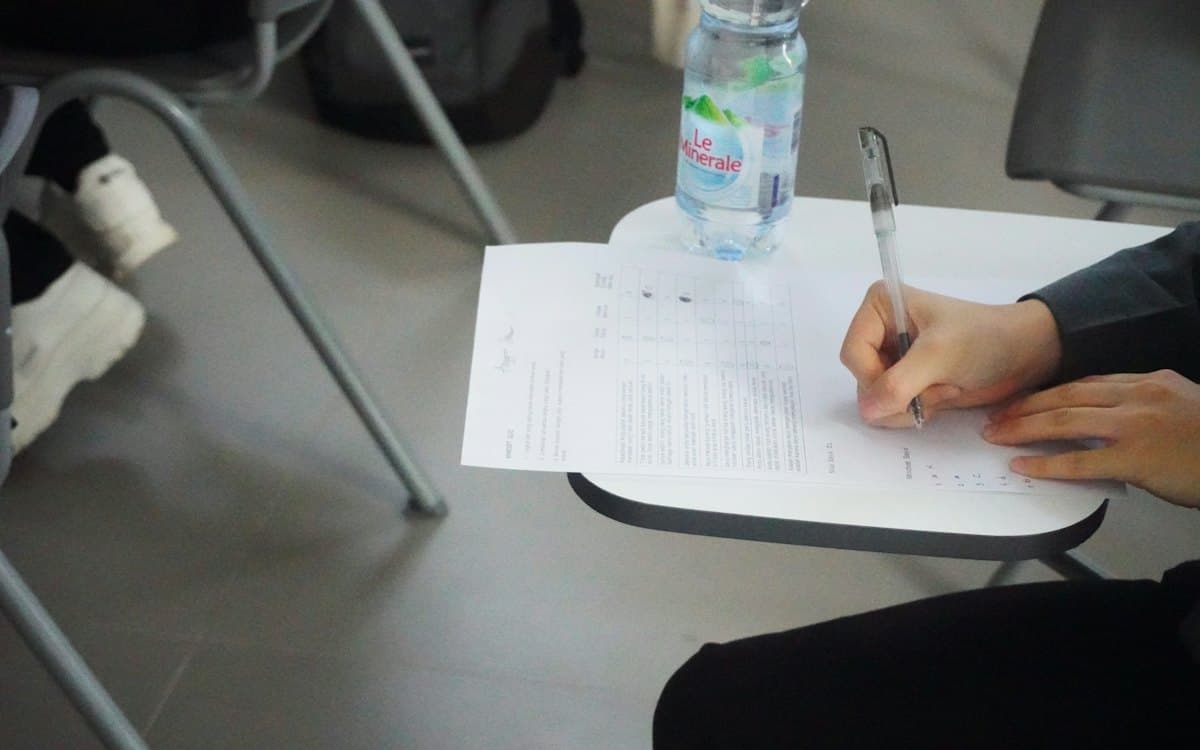 Examination Board
Student Assessment Portal
Secure online testing, auto-grading and detailed performance analytics.
Services
Website Development · SEO · Admin Dashboard
- Next.js
- Python
- Node.js
- AWS
View Case Study - Custom Software Platform
 Professional Training Institute
Learning Management System
Courses, assessments and progress tracking for learners and instructors.
Services
Website Development · SEO · Admin Dashboard
- Next.js
- Node.js
- Python
- AWS
View Case Study - Web Platform
 EdTech Startup
Online Course Marketplace
A marketplace connecting independent instructors with eager learners.
Services
Website Development · SEO · Mobile App
- Next.js
- Node.js
- React Native
- Google Cloud
View Case Study
FAQ
University Website Development FAQs
Common questions from registrars, admissions directors and marketing heads: programme finders at scale, departmental publishing, migrating without losing rankings, keeping a large site accessible, displaying accreditation, and integrating admissions and LMS systems.
Can you build a programme finder for hundreds of courses?
Can different departments manage their own pages?
Will the site meet accessibility requirements?
Can you integrate our admissions and LMS systems?
Can you migrate our existing site without losing search rankings?
How do you keep a large site accessible after launch?
Can you display our NAAC grade, NIRF rank and UGC recognition?
How long does a university website take?
Do you do both university website design and development?
Can you redesign our university site in phases?
Start your university website project with Raqbash
Book a free consultation with our team. We'll look at how an applicant reaches one programme among hundreds on your current site, and show you exactly what we'd change.
Explore more
Related Services & Industries
Edtech Website Development
LMS-ready, enrollment-driven websites for schools, coaching and course platforms.College Website Development
College websites that showcase courses, placements and campus life and drive admissions.School Website Development
Welcoming, safe school websites that inform parents and simplify admissions enquiries.Website Development
High-performance, SEO-ready websites that turn visitors into customers.SEO Services
Rank higher, win more traffic and generate leads with data-driven SEO.