Skip to content
RaqbashTechnologies

Logistics · Warehouse Apps

Warehouse Mobile App Development Services in Ahmedabad

Raqbash provides warehouse mobile app development services in Ahmedabad for 3PLs, distributors and fulfilment centres: Android scanner apps that guide every GRN, putaway, pick and dispatch, keep working when Wi-Fi drops in the far aisle, and post each movement to your WMS or ERP.

  • 4.9 rated in Ahmedabad on Google Reviews
  • In-house team in Ahmedabad
  • Last updated:
Years in business (since 2016)
10+
Clients across India
100+
Inventory accuracy, Warehouse Management System case study
99%

Warehouse app at a glance

Platforms
Android apps for rugged scanners and phones, an optional iOS supervisor app, a web control panel
Typical cost
₹6–45 lakh, depending on scope
Typical timeline
8–12 weeks (Scanner app on your WMS) to 6–9 months (Apps plus WMS backend)
Compliance & security
Role-based access, kiosk-mode lockdown, a per-movement audit trail, DPDP Act 2023 practices for staff data
Tech stack
Kotlin or Flutter, scanner SDKs, offline SQLite, Node.js or Python, WMS and ERP APIs
Location
Ahmedabad, Gujarat, India. Serving clients across India and worldwide.

Overview

Warehouse App Development Company in Ahmedabad

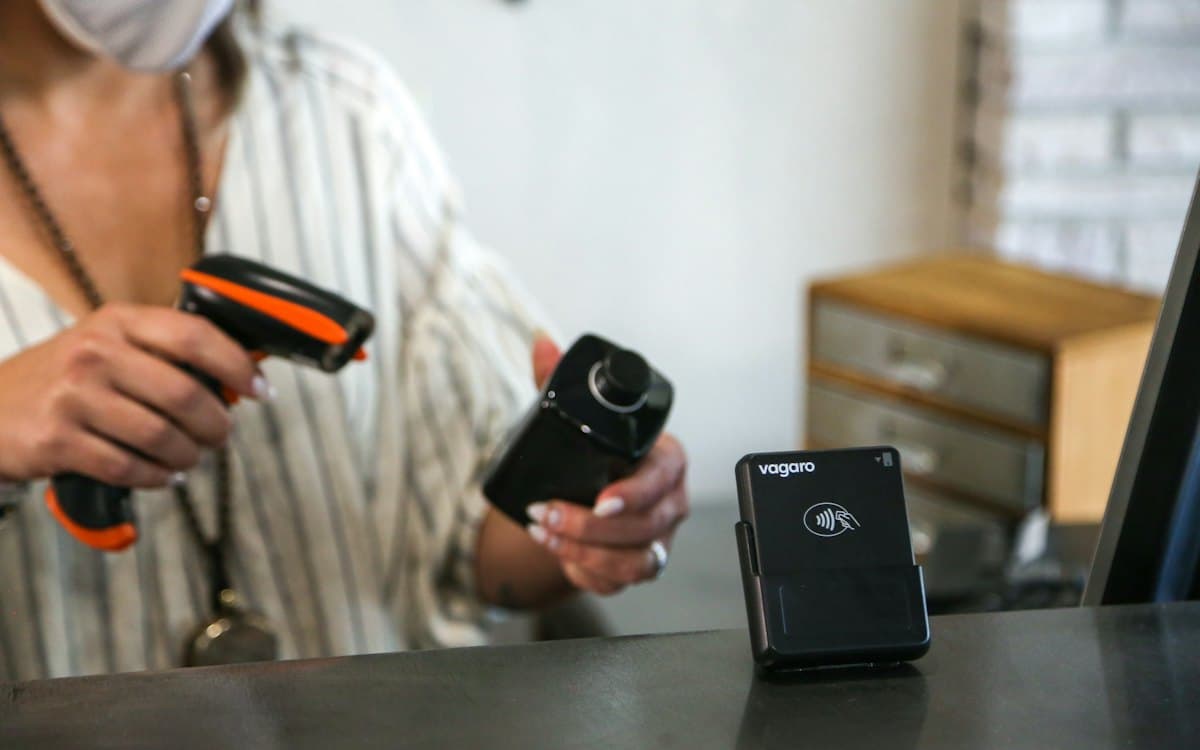
A warehouse app is a scanner-first mobile app that tells floor staff what to do next, whether receiving, putting away, picking, counting or loading, and records each step against a barcode or RFID tag. Raqbash builds them for 3PLs, distributors and in-house warehouses.

Sheds along the Changodar–Bavla belt, Aslali and Sanand GIDC run long shifts with changing staff. Metal racking blocks Wi-Fi, scanners pass between shifts, and many pickers read Gujarati or Hindi more easily than English labels. The app has to guide a new picker on day one and never lose a scan.

The app ecosystem

The Warehouse App Ecosystem We Build

A warehouse app has two core roles on the floor, plus an optional view for the brands whose stock you hold.

  • Operator app

    For receivers, pickers, packers and loaders.

    • Receive against a PO or ASN
    • Put away to a suggested bin
    • Pick by wave, zone or order
    • Count assigned bins
    • Load trucks by scan
  • Supervisor app

    For shift leads and the warehouse manager.

    • Release waves and assign zones
    • Approve stock adjustments
    • Watch dock and pick progress
    • See productivity by operator
  • Client view (optional)

    For brands storing goods with a 3PL.

    • Check live stock by SKU
    • See inbound and dispatch status
    • Download GRN and POD copies
    • Raise a stock query

Key features

Key Features of a Warehouse App

These six flows cover every movement from the inbound dock to the outbound truck.

  1. GRN and inbound with variances

    Cartons are scanned against the PO, and shortages or damage photographed before the truck leaves.

  2. Directed putaway

    A bin is suggested by SKU velocity and free space, and a bin scan confirms the move.

  3. Wave and zone picking with pack checks

    Waves are released by carrier cut-off, pickers work one zone, and packers re-scan each item.

  4. Cycle counts without a shutdown

    Blind counts on a few bins daily, with recounts on variance, keep stock right without a shutdown.

  5. Offline scanning on rugged Android

    Hardware triggers, UHF RFID where tags are used, and a local queue for Wi-Fi dead zones.

  6. Dispatch and loading by scan

    Cartons are scanned onto the right truck in stop order, and the load sheet goes out before departure.

How it works

How a Picker Works a Shift in Your Warehouse App

A picker's shift follows five scans, and the app decides where they walk next.

  1. Step 1

    Log in by badge

    Scan an ID badge to pick up the shift's zone.

  2. Step 2

    Take a wave

    Lines arrive sorted by walking path.

  3. Step 3

    Scan bin, then item

    Two scans per line stop wrong picks at the shelf.

  4. Step 4

    Drop at the pack station

    Packers re-scan items against the order.

  5. Step 5

    Hand over to dispatch

    Cartons are staged by truck and stop.

Security & compliance

Security & Controls for Warehouse Apps

In a warehouse, security means stock control: every movement is tied to a person, a device and a time.

  • An audit trail for every movement

    Receipts, moves, picks and adjustments carry the operator, device and timestamp.
  • Locked-down devices

    Kiosk mode keeps shared scanners on the warehouse app only, with remote wipe if one goes missing.
  • Client data kept apart

    On a 3PL floor, each brand sees only its own SKUs, documents and movements.
  • Supervisor approval for stock adjustments
  • Shift login by badge scan or PIN
  • Offline queue encrypted on the device
  • Staff productivity data handled to DPDP Act 2023 practices

Cost & timeline

Warehouse App Development Cost

A warehouse scanner app on an existing WMS typically costs ₹6–9 lakh; a picker, supervisor and client app suite costs ₹12–20 lakh, and building the WMS backend too costs ₹25–45 lakh.

  • Scanner app on your WMS

    ₹6–9 lakh

    8–12 weeks

    A WMS or ERP with APIs that needs mobile scanning.

    • Operator app for Android
    • GRN, putaway and picking
    • Offline queue
    • Hardware scanner support
  • Most common starting point

    Warehouse app suite

    ₹12–20 lakh

    12–18 weeks

    3PLs that need supervisors and clients on mobile.

    • Operator and supervisor apps
    • Wave picking and cycle counts
    • Client stock view
    • Dispatch and loading
  • Apps plus WMS backend

    ₹25–45 lakh

    6–9 months

    Operators replacing spreadsheets or an old WMS.

    • Everything in the suite
    • Custom WMS backend
    • Multi-warehouse, multi-client
    • ERP and Tally sync

What moves the cost of a warehouse app

  • Your WMS or ERP

    Clean APIs are quick to use; without them, we build a sync layer first.

  • Devices

    Rugged scanners, RFID readers and label printers each need testing.

  • Picking strategy

    Wave, zone and batch picking add rules beyond order-by-order.

  • Sites and clients

    More warehouses and 3PL clients add permissions and reports.

Indicative ranges from Raqbash projects in Ahmedabad, excluding store fees, cloud usage and support. Not a quote. See Mobile app development cost in Ahmedabad for how the bands are built.

Technologies & integrations

Warehouse App Technologies & Integrations

Hardware support decides how a warehouse app feels on the floor, so we test on your devices.

Mobile

  • Kotlin
  • Flutter
  • React Native

Backend & cloud

  • Node.js
  • Python
  • PostgreSQL
  • AWS

Warehouse integrations

  • Zebra DataWedge
  • Honeywell SDK
  • UHF RFID readers
  • Bluetooth label printers
  • WMS & ERP APIs
  • Tally

Why Raqbash

Why Warehouse Operators Choose Raqbash

Warehouse operators choose us because we have built barcode-driven warehouse and inventory systems, not just apps.
  • We have built the backend

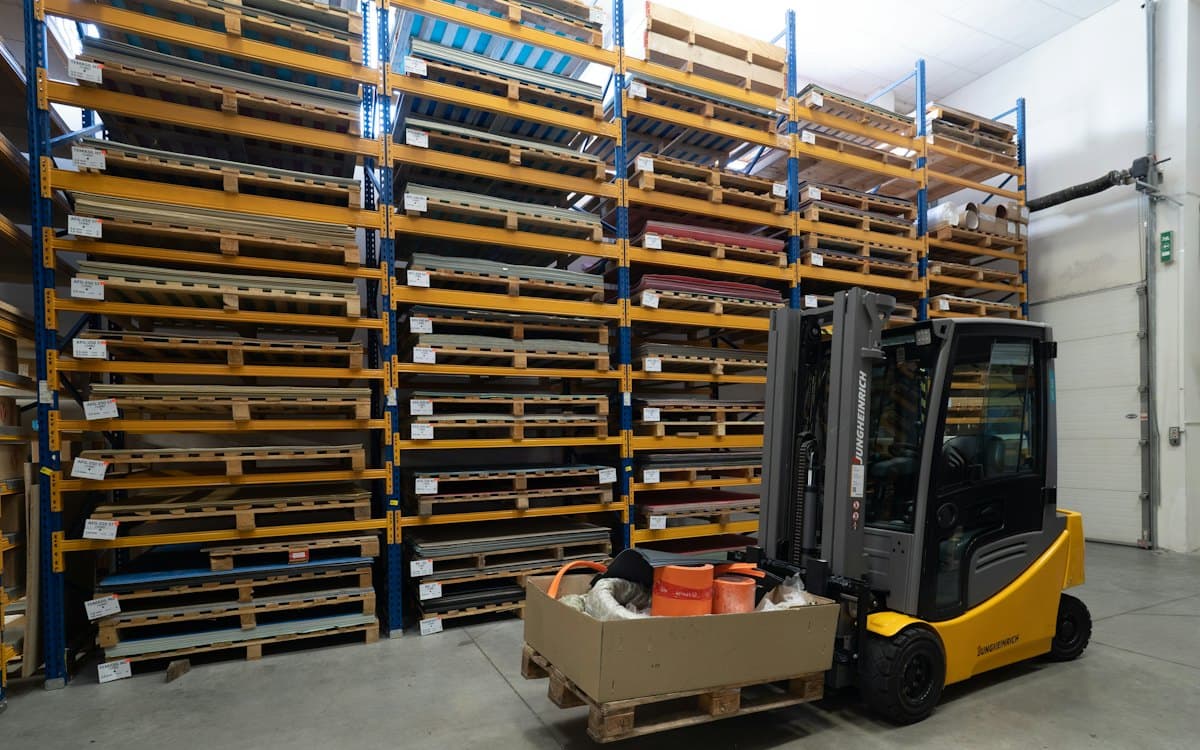
    Our WMS work covers barcode inbound, putaway, picking and dispatch across warehouses.
  • Built for a scan every few seconds

    Hardware triggers, sound and vibration cues, and screens readable at arm's length.
  • Gujarati and Hindi on the floor

    New staff can work from day one in the language they read best.
  • A shift on your floor first

    For Ahmedabad sites, we walk a full shift before designing any flow.

How we deliver

How we build and launch your warehouse app

Warehouse projects follow our six steps, with device testing on your own scanners from the first sprint and a pilot in one zone before go-live.

  1. Step 01

    Discover & Scope

    Written scope, screen list and fixed estimate

  2. Step 02

    UX & Clickable Prototype

    Clickable prototype you can test on a phone

  3. Step 03

    Agile Build (2-week sprints)

    A working build to install every sprint

  4. Step 04

    QA, Security & Real-Device Testing

    Test report across real Android and iOS devices

  5. Step 05

    App Store & Play Store Launch

    Live store listings under your developer accounts

  6. Step 06

    Support, Analytics & Growth

    Monthly crash, usage and release report

FAQ

Warehouse Mobile App Development Services in Ahmedabad: FAQs

Practical answers for teams planning a warehouse app.

Which scanners and devices does a warehouse app run on?

Any modern Android device. We support rugged scanners from makers such as Zebra and Honeywell through their SDKs, so the hardware trigger and fast laser scanning work. Phones with camera scanning suit small teams and low volumes. We test on the devices you own, or help you choose before you buy a batch.

Does the app keep working when Wi-Fi drops inside the warehouse?

Yes. Tasks download to the device, and every scan is saved locally, then synced in order when the connection returns. Conflicts, such as two people picking the last unit of a SKU, are flagged to the supervisor instead of silently overwritten. We also map Wi-Fi dead zones during discovery, because they shape the sync design.

Can the app work with our existing WMS, ERP or Tally?

Usually, yes. If your WMS or ERP exposes APIs, the app reads tasks and posts movements directly. Tally can sync stock and vouchers through its integration options. Where a system has no API, we add a small sync service. We test this during scoping, because it decides whether you need a new backend or only the apps.

Should we use barcodes or RFID?

Barcodes for most warehouses. They cost almost nothing per label and work with every scanner. RFID helps where you count high volumes of tagged items, such as apparel or returnable crates, because a reader captures many tags at once. Many sites mix both. We support either and advise on tags and readers before you commit.

Can our 3PL clients see their own stock?

Yes, through an optional client view in the app or on the web. Each brand sees only its own SKUs, inbound receipts, dispatches and documents, updated as your team scans. It cuts the daily stock-statement emails and the calls that follow. You decide which clients get access and what each one can download.

How much does a warehouse app cost?

Typically ₹6–9 lakh over 8–12 weeks for a scanner app on a WMS that already has APIs. A full operator, supervisor and client suite with wave picking and cycle counts costs ₹12–20 lakh over 12–18 weeks. Building the WMS backend as well usually costs ₹25–45 lakh over 6–9 months. Each quote is fixed after scoping.

Start your warehouse app project with Raqbash

Tell us your WMS, your devices and the flows that slow your floor down. We will send a written scope and a fixed quote for warehouse mobile app development services in Ahmedabad.